Published 02.07.2026
Pallas’s cats have three kittens at the zoo
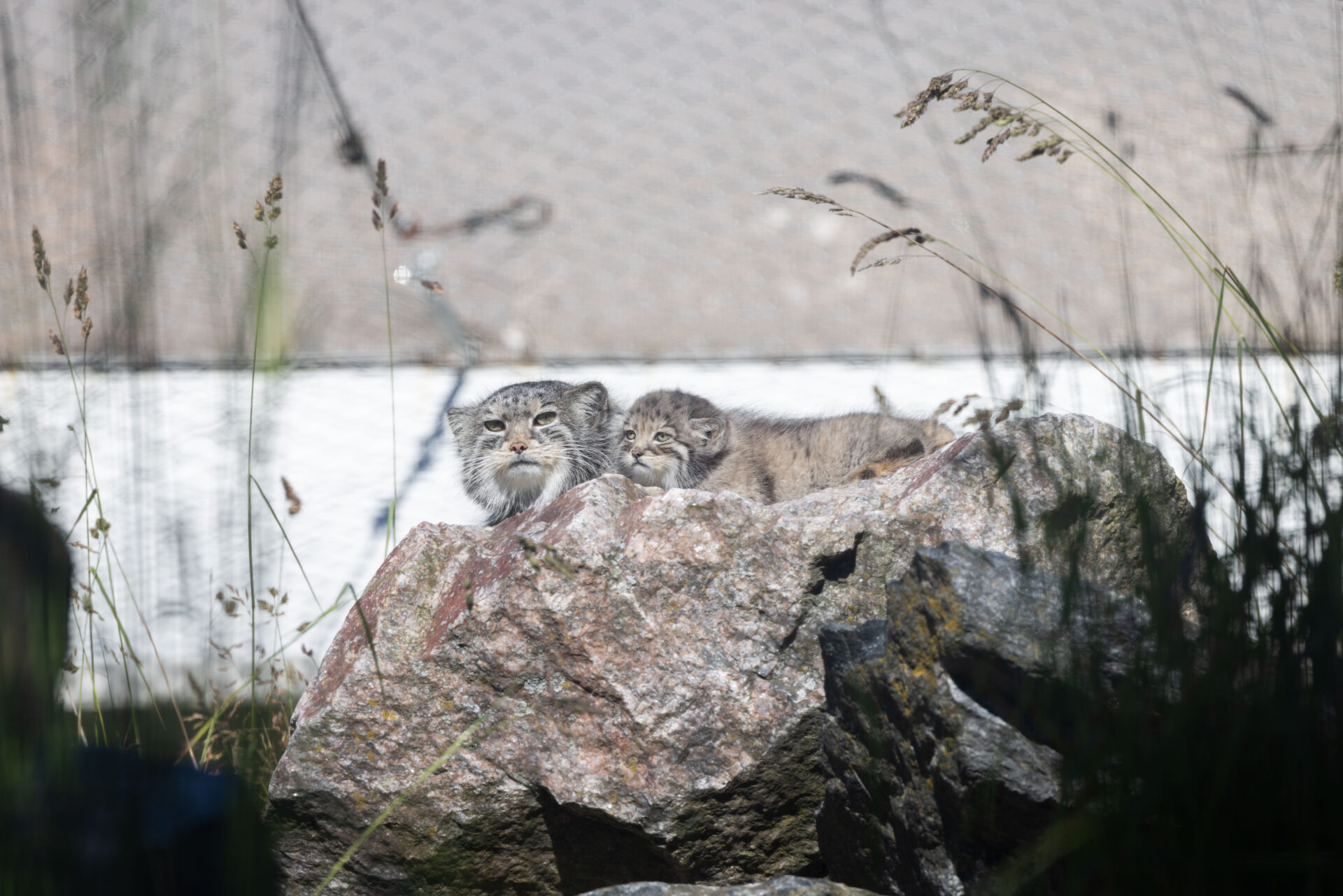
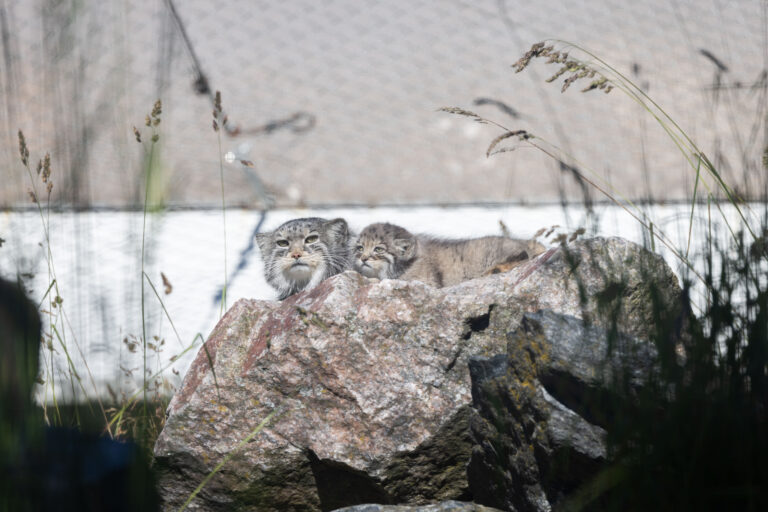
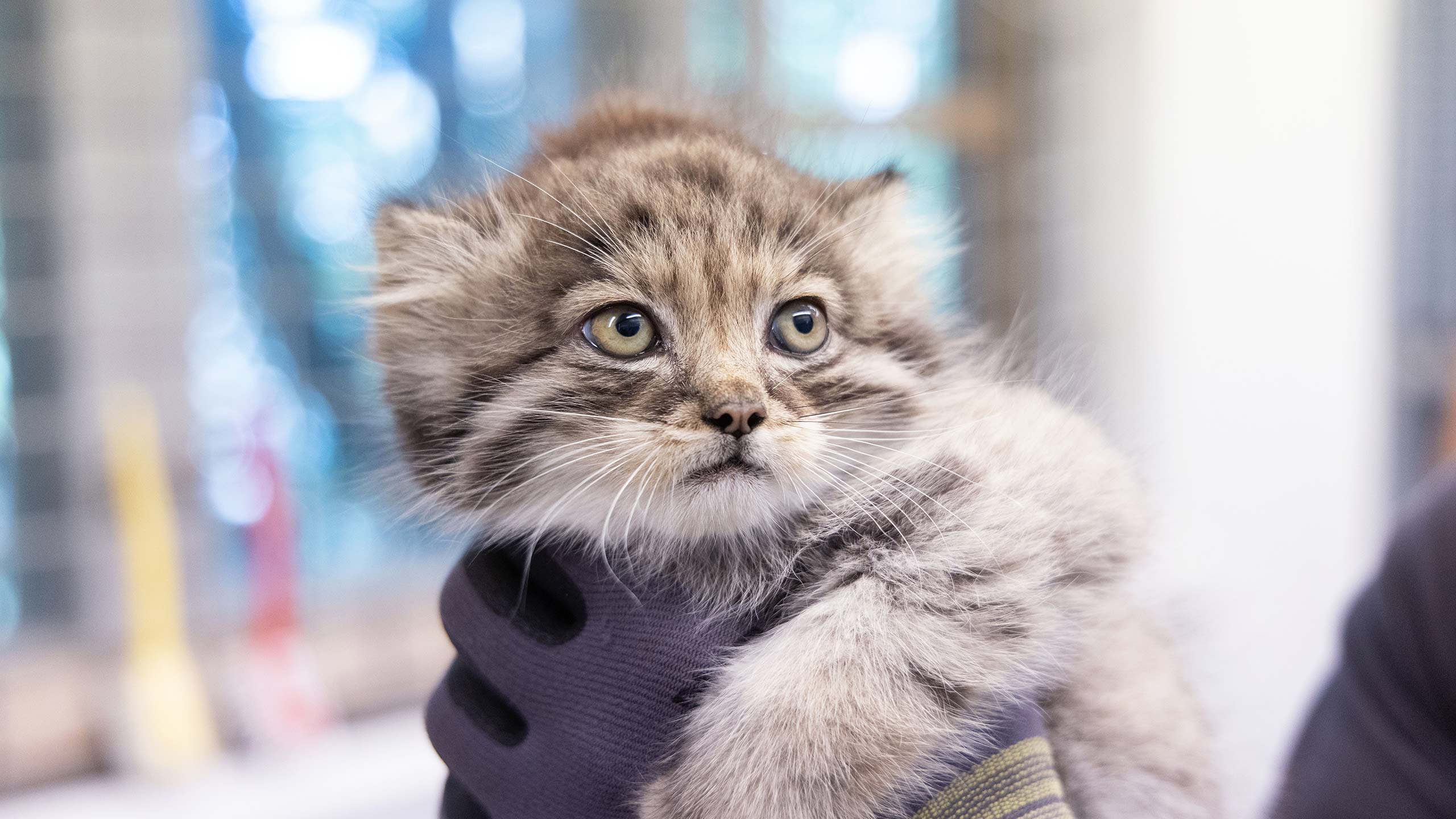
Korkeasaari Zoo’s female Pallas's cat has been nurturing three kittens in her den and has now guided her two-month-old offspring outside for the first time. This is the third litter for the zoo's Pallas's cat couple. Zoos contribute to the conservation of the little-known Central Asian steppe cat in many ways.
The birth of the kittens was noticed when the female Pallas’s cat began to spend a lot of time in the nest box at the beginning of May. Later, the mother was seen carrying one kitten in her mouth. The den was first peeked into in June, and only then it was confirmed that there were three kittens.
Animal parents are always given peace to take care of their offspring. The female Pallas’s cat has also made it clear that help is not needed. Whenever a zookeeper entered the area, she immediately slipped into the nest box to protect her kittens. Three weeks ago, the kittens began to venture outside the den, and last Friday they were seen outdoors for the first time. Their father lives in his own enclosure except during the short mating season in early spring, as Pallas’s cats also value their own peace within their territory.
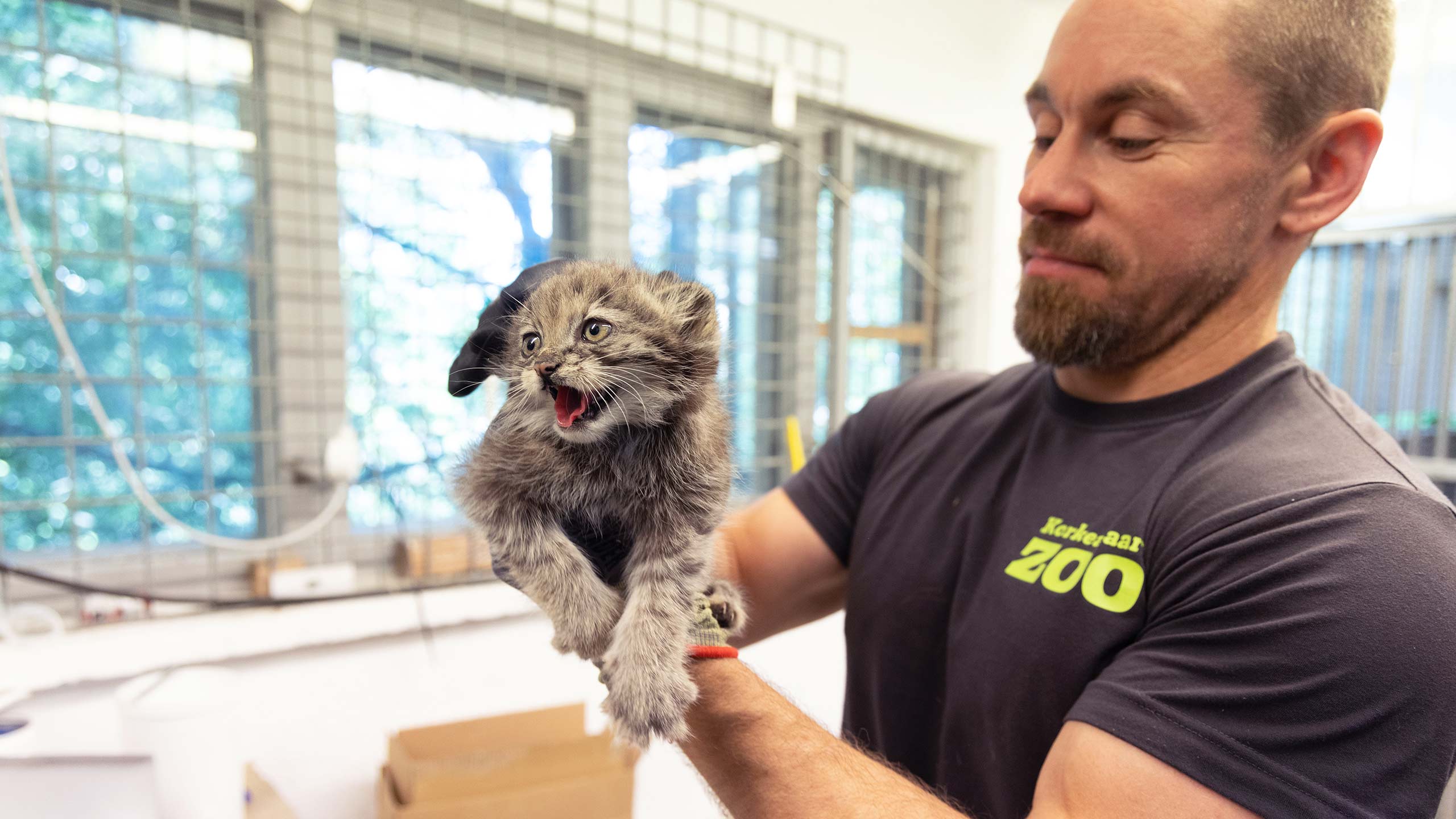
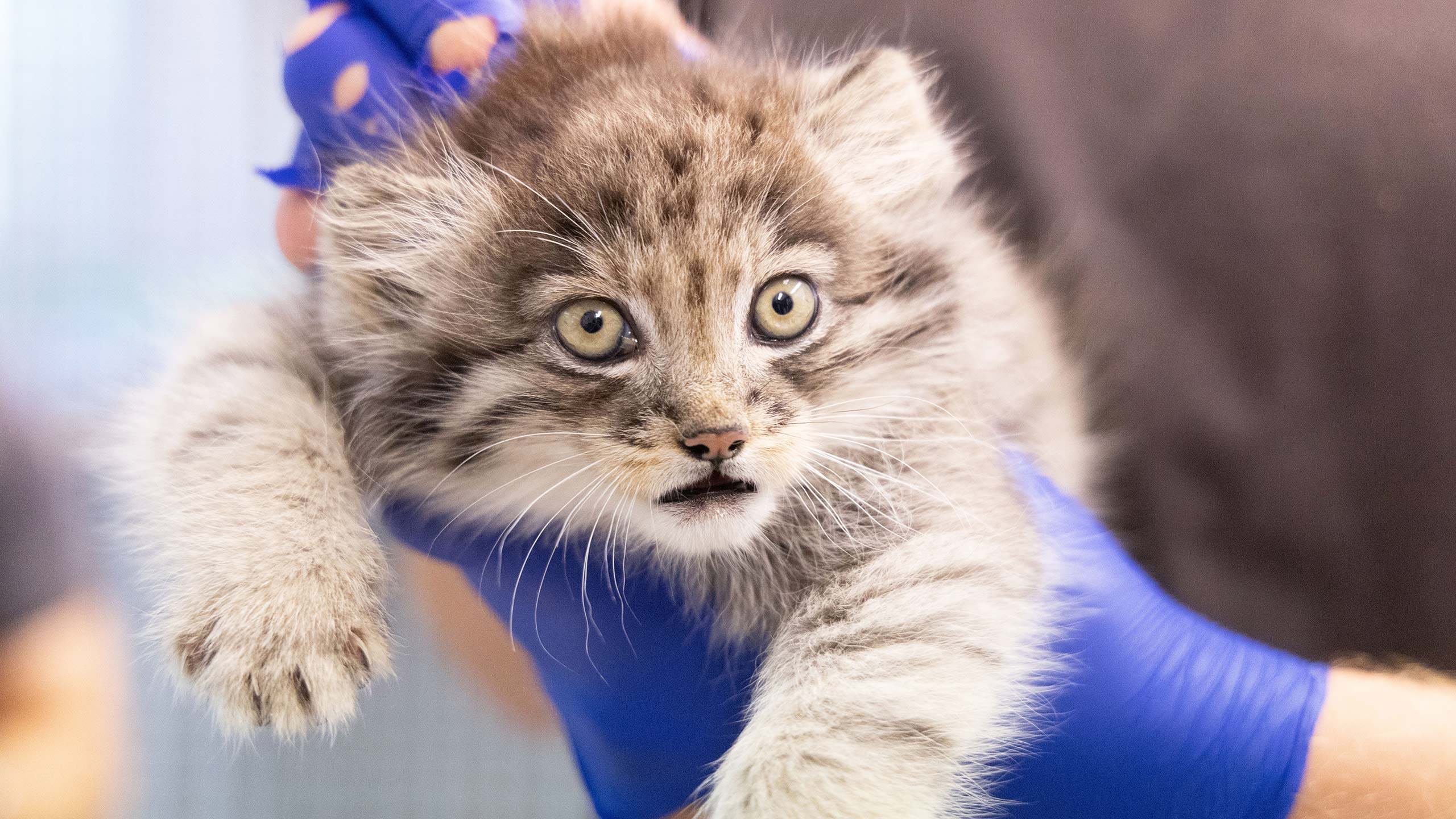
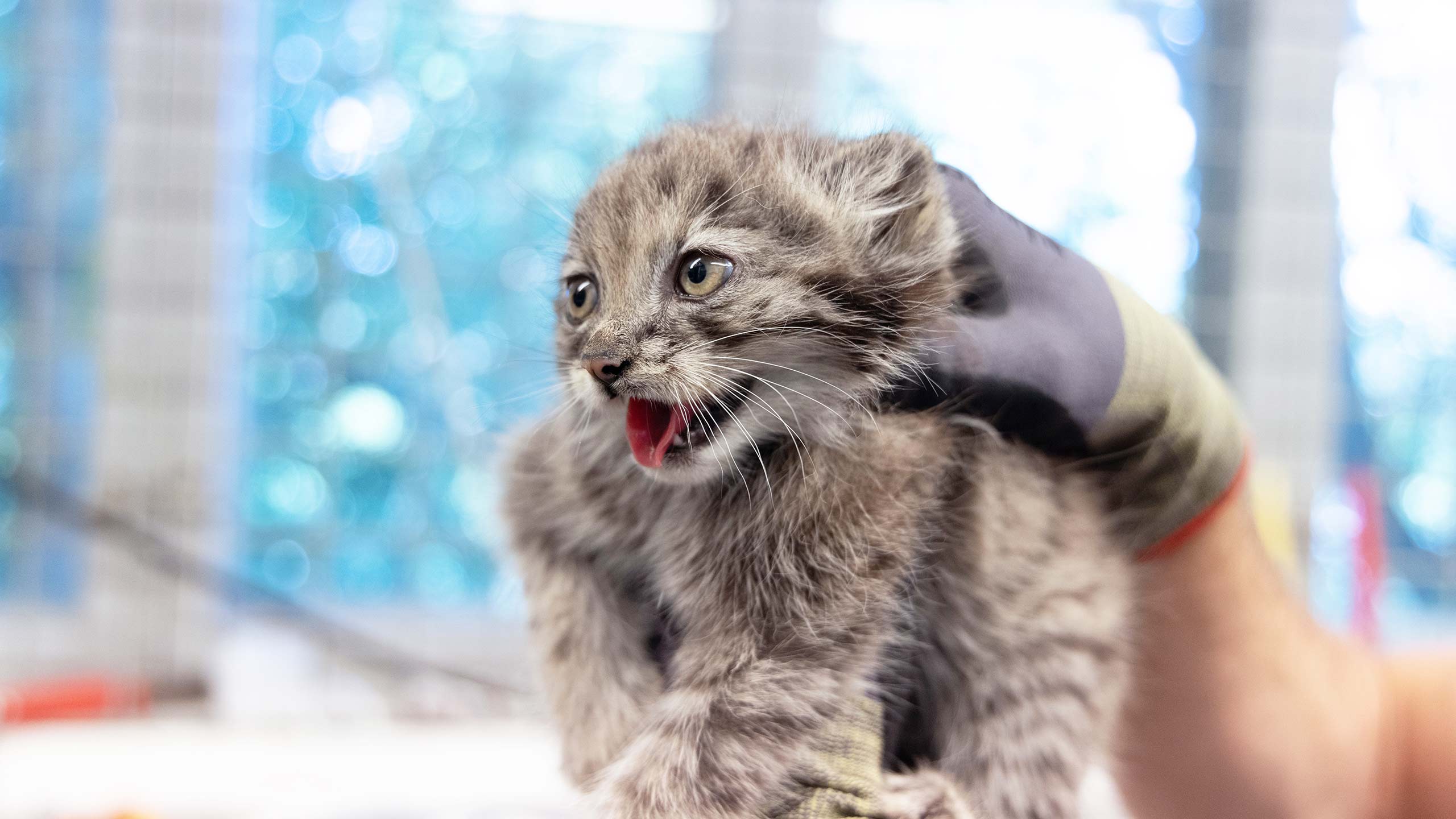
The kittens were given a brief health check while the mother was outside having her breakfast. In addition to zookeepers, a veterinarian was present during the check-up, from whom the kittens received deworming medication and identification microchips. They were also weighed, photographed for identification purposes, and their genders were checked.
“One of the trio is a male and two seem to be females. This is the largest litter for this manul pair so far; first, they had one kitten and in the second litter there were two kittens. The older siblings live in zoos in Prague and Paris, as well as in the Swedish Nordens Ark. The goal of conservation program is that they would eventually have their own kittens,” says zookeeper Jonne Stenroth.

Pallas’s cats, also known as manuls, belong to an ex-situ conservation program of European Association of Zoos and Aquaria EAZA, which aims to maintain a healthy zoo population to secure the future of the little-known and elusive Pallas’s cat. Approximately 210 manuls live in zoos worldwide. The kittens born at Korkeasaari Zoo grow under their mother’s care until 8–9 months of age, after which it is time for them to move to other EAZA zoos to join breeding partners selected by the species coordinator managing the conservation programme.
Korkeasaari Zoo also plays a significant role in the conservation of Pallas’s cats in the wild. This work is supported by the zoo’s annual Night of the Cats conservation event in September, where funds raised are directed to the Pallas’s Cat International Conservation Alliance. This year, Korkeasaari Zoo’s contribution will once again support the most urgent conservation projects in the species’ native habitats in Central Asia. Over the past year, these projects have included population monitoring and habitat mapping, assessing the impacts of tourism, studying the effectiveness of artificial dens, and engaging local communities in Pallas’s cat conservation.
The Pallas’s cat is a small wildcat native to the grasslands and steppes of Central Asia, where it occurs across 16 countries. Despite its extensive range, many populations are small, isolated, and declining. The greatest threats to the species are habitat loss due to agricultural expansion and industrial development, as well as being attacked by dogs.
Take part in Pallas’s cat conservation!
Join us in supporting conservation projects for Pallas’s cats across their native range. The Pallas’s cats thank you!