Enrichments
In nature, animals come across a tremendous amount of different things that they experience through different senses. Prey animals must be wary of predators, and predators can follow prey across long distances. In addition to finding food, animals spend a lot of time looking for a mate. When they are in human care, there is plenty of food and water around, the environment is safe and even a mate can be found nearby. To ensure that the animals have enough activities to do in the zoo as well, zookeepers plan and arrange various enrichments for them.
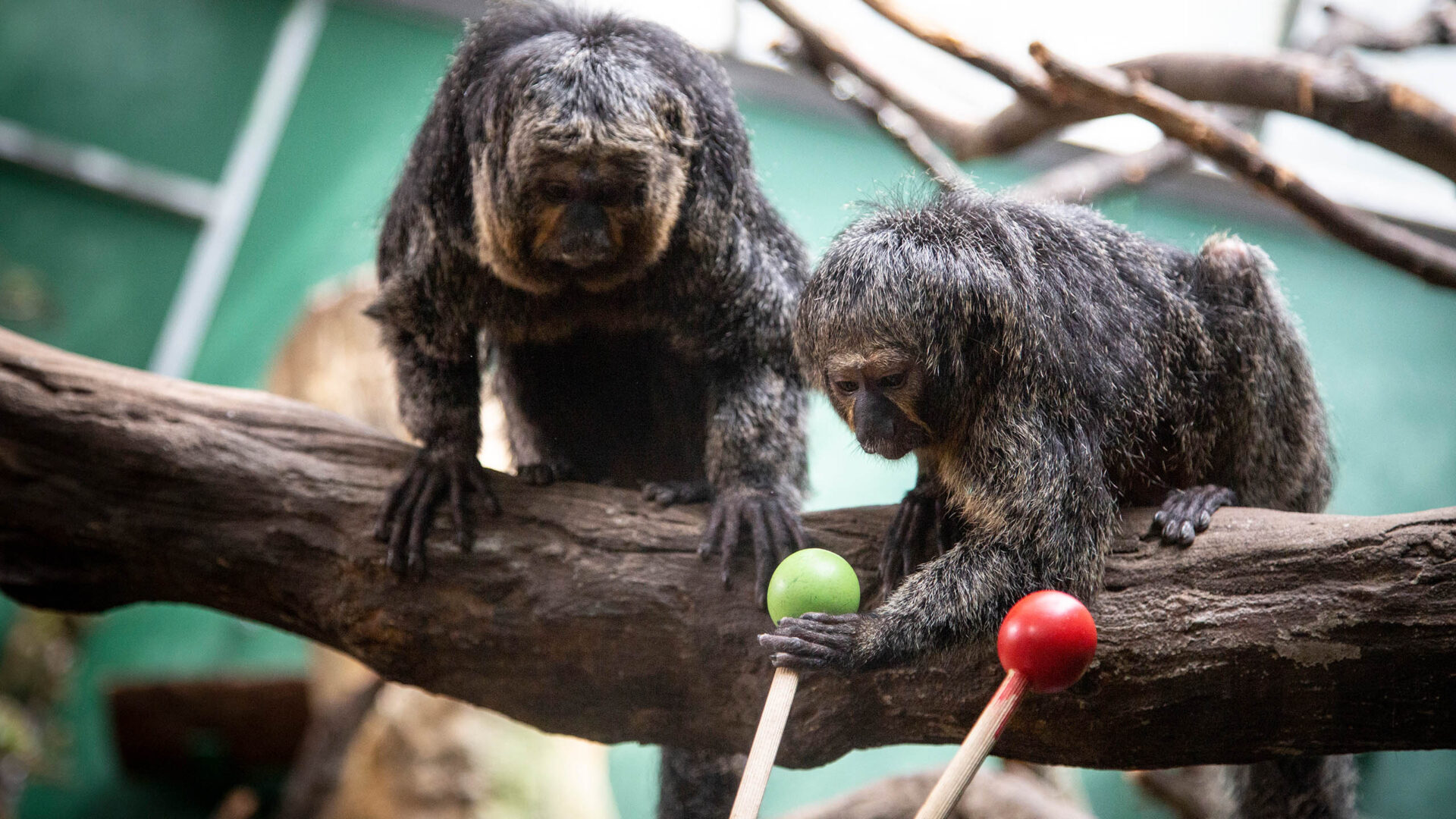
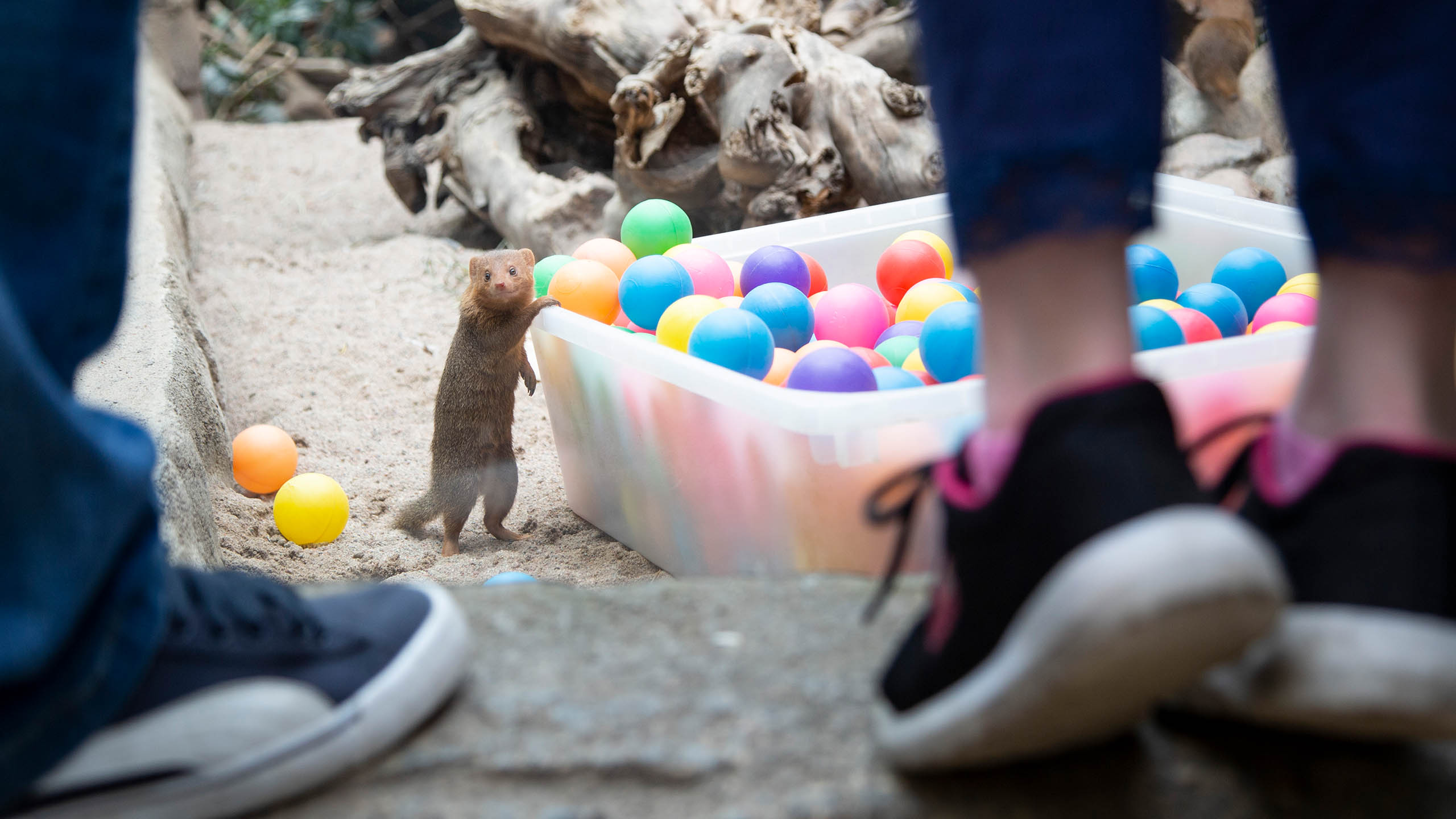
When planning these activities, the natural temperament and behaviour of the species must be taken into account; the same kind of enrichment does not suit all animals. Nor can the same activities be used too often on the same animal to maintain their desired effect. In many cases, but not always, the enrichment activities have to do with food and finding it. At its simplest, an enrichment activity may consist of an activation toy, such as a ball, that many people have in their homes. Korkeasaari Zoo is actively researching animal welfare and constantly developing new enrichment activities for the animals.
Enriching feeding
When food is offered in an enriching way, the animal gets to use both its brain and its brawn to acquire it. The food can be hidden in cardboard boxes or cloth bags, hung from a rope or flexible bungee cord, hidden inside various activation toys and placed in high or otherwise difficult places.
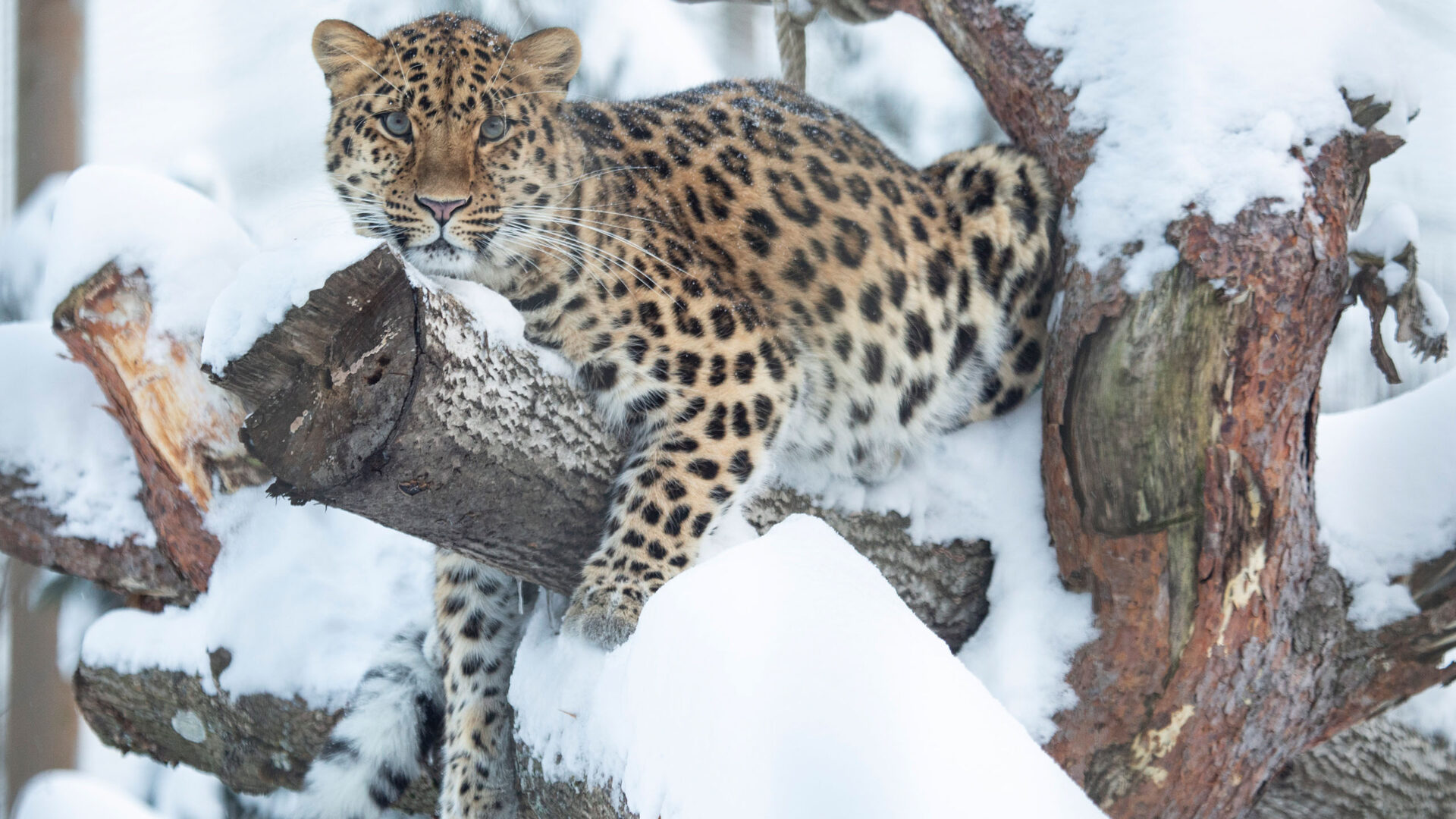
Predators retain their instinct to hunt even in zoo conditions. In nature, hunting consists of several stages, one of which is mauling the prey. This is why zookeepers use methods such as putting meat in jute bags filled with hay and hung by ropes: it allows the feline to better tear its food. All predators do not hunt during the day, so their food rhythm contains days of fasting even in the zoo. Zoo animals cannot be offered live prey, with the exception of insects. Many animals living in the Tropical Houses get to hunt grasshoppers and dig for mealworms in various places.
Sensory enrichments
Sensing and looking for prey are stages of the hunt, and a trail of blood can lead a predator to its food even in the zoo. Scents are also significant in animal communication. Scent enrichment, such as bedding or droppings brought in from another animal’s enclosure activate predators to survey their environment. They also enjoy other powerful scents, such as various spices and perfumes. These could be hidden inside a jute bag, for example, or sprinkled on a snowman or tree trunk. Scents of humans, such as the scents left by a zookeeper’s hands or shoes, can also be interesting.
In addition to smell, other senses can also be utilised in the planning of enrichments. We have experimented with a sound tunnel for small monkeys that begins to play the sounds of the rainforest when a monkey enters it, for example. The animal can also be given the opportunity to look at various photos and videos, and even change them at the press of a button.