Published 03.06.2026
Important musk ox calf born at Korkeasaari Zoo
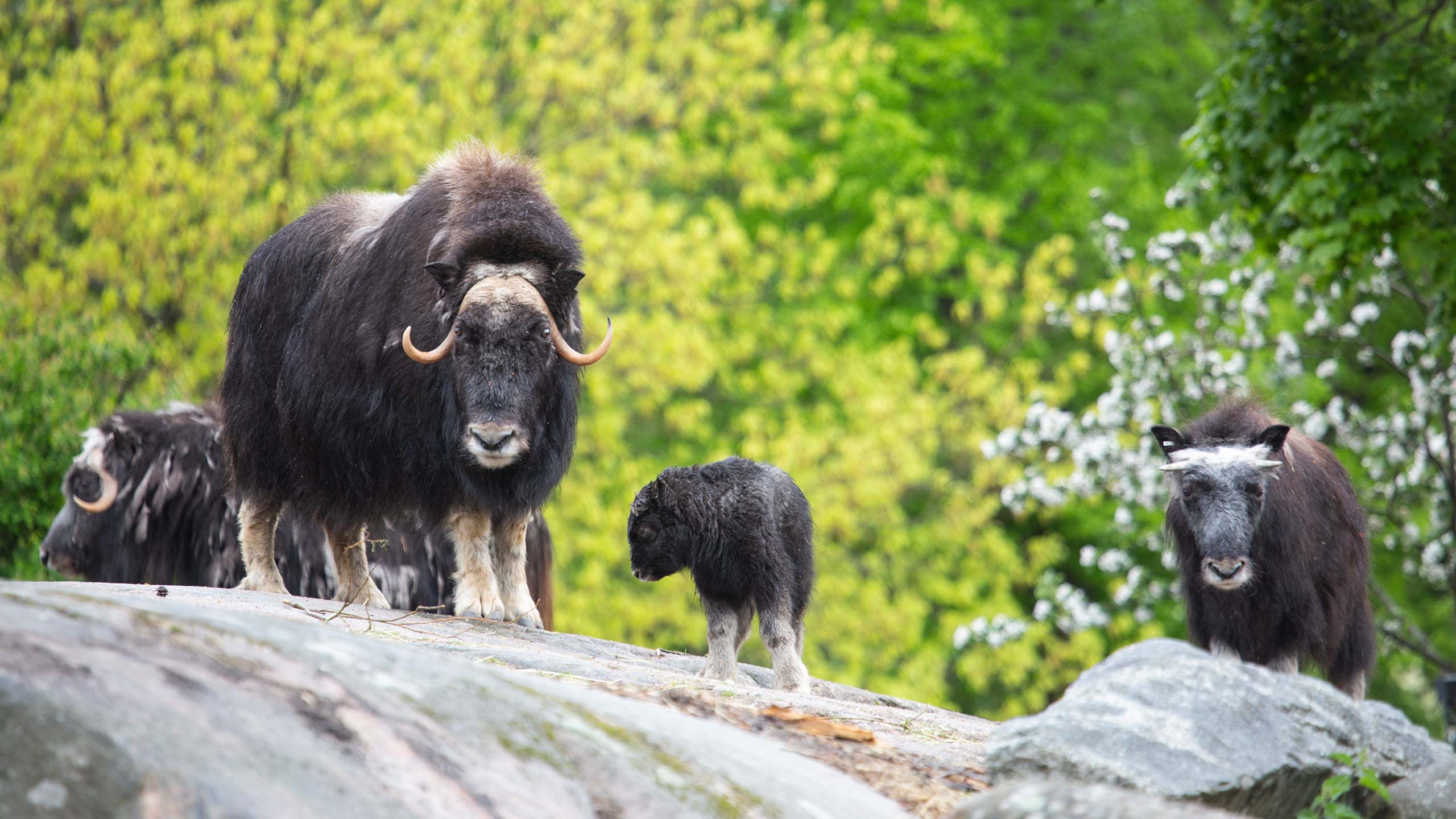
Korkeasaari Zoo is celebrating a new addition to its musk ox herd: a small calf was born in May. The newcomer is an important addition to the species’ conservation programme, through which European zoos help preserve the genetic diversity of the species. The calf carries genes from its late father, which are rare within the European zoo population.
The two-week-old calf spends most of its time close to its mother, but it also enjoys running around independently, setting off on little exploratory adventures. Its five-year-old mother has been very protective of her offspring, while the herd’s two other members have given her the space she desires. The new arrival has been naturally accepted as part of the group.
Musk ox calves are born weighing less than ten kilograms after a gestation period of up to nine months. The mother nurses the calf several times a day, but the young musk ox has already begun sampling twigs and hay alongside its mother. The mother and calf have access to shaded, cooler indoor facilities whenever they wish. They can also be seen daily by zoo visitors in their outdoor enclosure.
Ongoing conservation work
The musk ox is part of the European Association of Zoos and Aquaria’s EEP conservation programme. The programme also known as EEP aims to maintain the species’ genetic diversity. The calf born at Korkeasaari Zoo is particularly valuable to the programme because its paternal genes are rare within the European zoo population. The male that sired the calf was originally brought to Korkeasaari Zoo from Moscow Zoo. The male sired total of four offspring at Korkeasaari Zoo, before he passed away last winter. Of the previous calves, two have reached adulthood and been transferred to other zoos for breeding. One one-year-old male still lives in his natal enclosure.
A century ago, the musk ox became threatened due to excessive hunting. The species’ status improved thanks to intensified conservation efforts, and it is now once again classified as Least Concern. Wild musk oxen live in northwestern Canada and northern Greenland, and populations have also been introduced to western Greenland, Norway, Alaska, and Russia. However, climate change has emerged as a new threat, which is one reason why zoos strive to maintain a genetically diverse population as a safeguard for the species’ future.