Published 13.11.2025
Young male Amur tiger has arrived at Korkeasaari Zoo
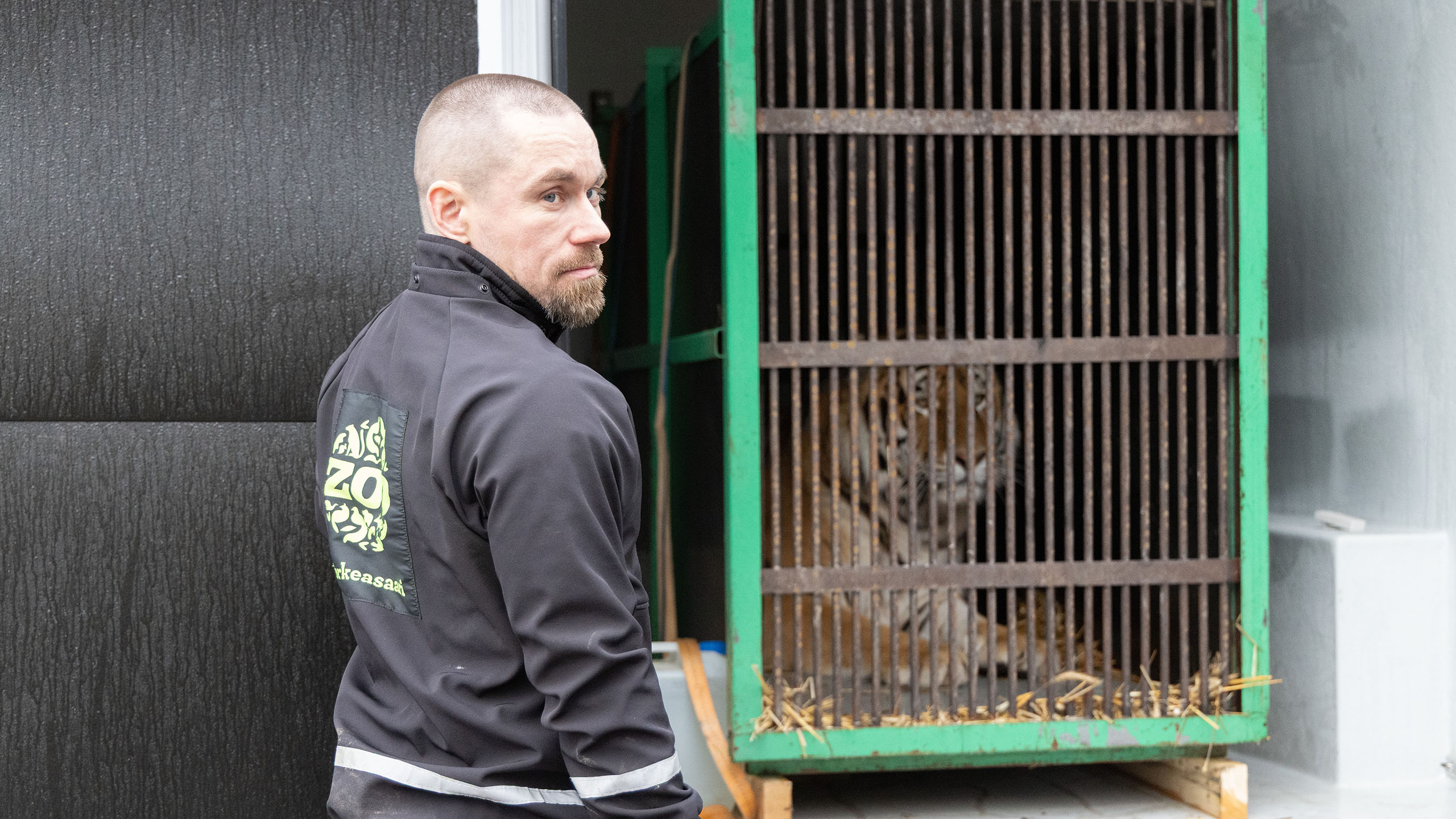
This week, a young male Amur tiger from Poland has settled into the Cat Valley. Korkeasaari Zoo is already home to two Amur tigers: a three-year-old female and her twelve-year-old mother. The male has been selected as a future breeding partner for Korkeasaari Zoo’s young female at the conservation program for the endangered Amur tiger.
The two-year-old male tiger was born at Zoo Opole in Poland. His two brothers moved to zoos in Germany and the Netherlands earlier this year. After arriving in Finland on Tuesday, the tiger has spent the past couple of days resting and getting settled into his new home. Now he also has access to an outdoor enclosure, which is reserved just for him.
“The male has been described as a calm fellow who gets along well with everyone. The young tigers have been genetically matched as a suitable pair, and even their names fit nicely together: the female born in Korkeasaari Zoo is called Odeya, and the male from Poland is Odris. We hope for cubs in the future, but for now, we’re getting to know the new tiger and make him feel comfortable in his new home,” says animal keeper Jonne Stenroth.
The vitality of the captive Amur tiger population is maintained through the European zoos’ EEP conservation program. The program’s coordinator selects genetically compatible mates for breeding-age tigers, and zoos arrange the necessary animal transfers. There are currently about 550 Amur tigers in zoos and their genetic diversity is greater than in the wild.

In the wild, the Amur tiger lives in eastern Siberia and is the northernmost of all tiger subspecies. According to the latest estimates there are less than 500 individuals in the wild. Poaching and the decline of prey animals are the greatest threats to Amur tigers. Illegal logging fragments their habitats, and roads built for logging provide access to previously remote forest areas. African swine fever has significantly reduced wild boar populations—the Amur tigers’ preferred prey—making food scarcer than before.
Korkeasaari Zoo has supported the conservation of wild Amur tigers for over 25 years. Since conservation work in Russia cannot currently be supported, recent tiger conservation efforts have focused on research within the captive population to promote breeding success and preserve genetic diversity.