Published 03.12.2025
Swans are being treated at Korkeasaari Zoo’s Wildlife Hospital
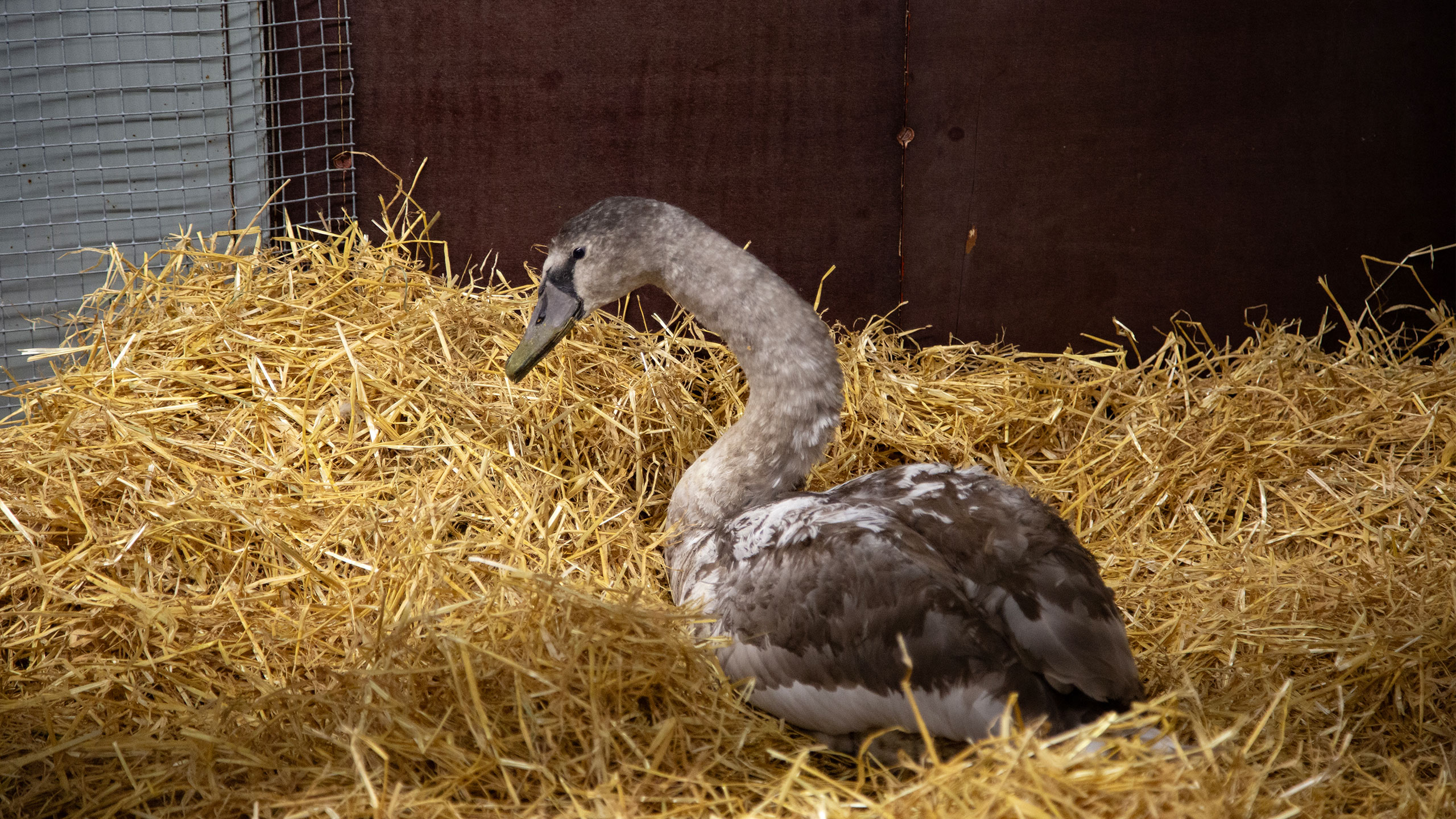
During the last week of November, a total of five injured swans were brought to Korkeasaari Zoo’s Wildlife Hospital. Three mute swans were found in the railway yard at Helsinki Central Station, one mute swan was brought from Hernesaari, and a whooper swan was transported for treatment from Nokia. Due to the severity of their injuries, three of the swans did not survive, and two are still being cared for at the Wildlife Hospital.
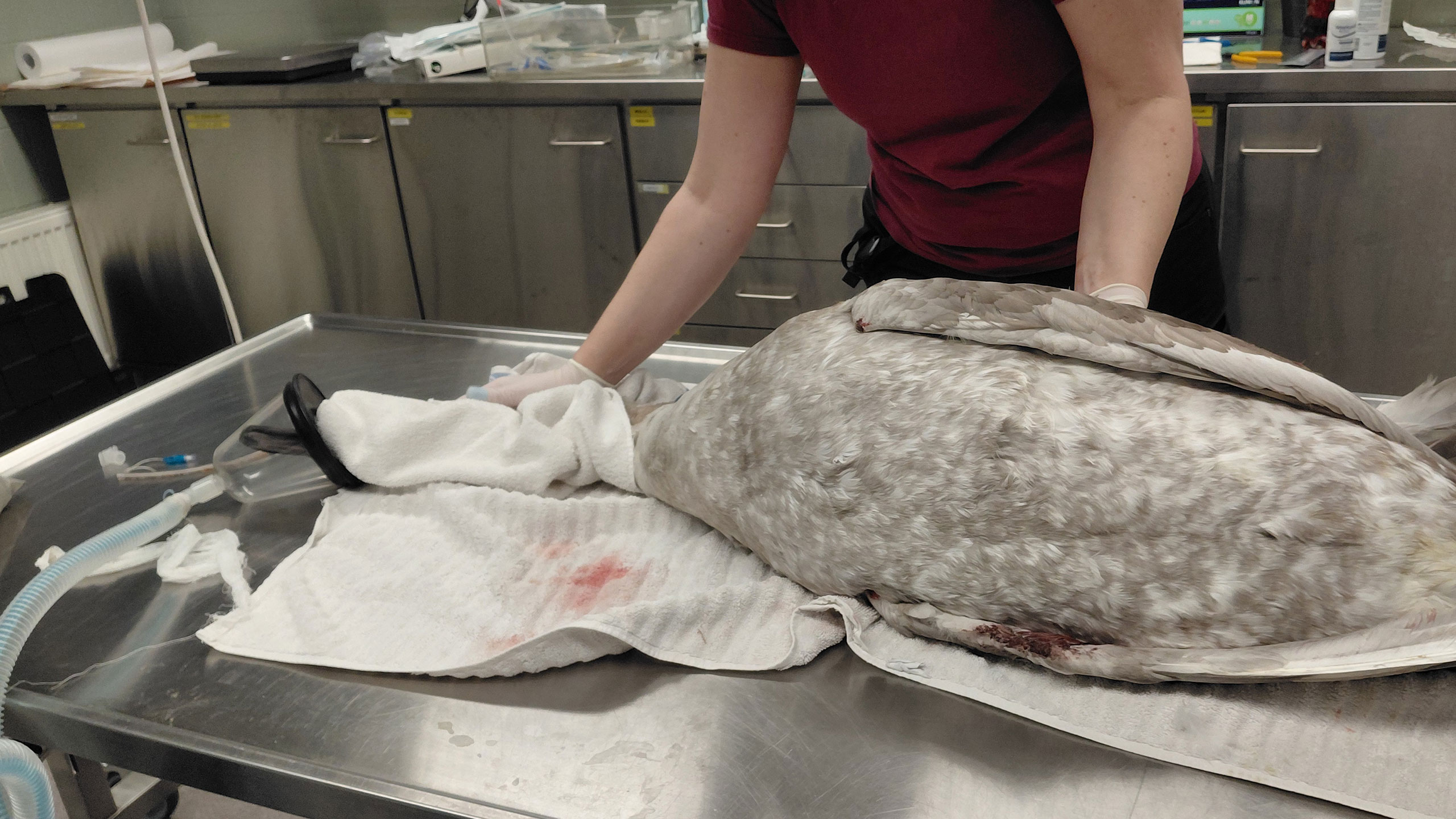
The mute swans brought from the railway yard had collided with the overhead power lines above the tracks. The same unfortunate phenomenon occurs yearly: swans moving around the Töölönlahti area fail to notice overhead obstacles—such as the power lines at the railway or Pitkäsilta— and collisions can cause serious injuries. Of the two swans transported by the rescue department to the Wildlife Hospital on last Monday of November, the adult had already died en route, and the young swan had to be euthanized due to very severe injuries revealed by X-ray examination.
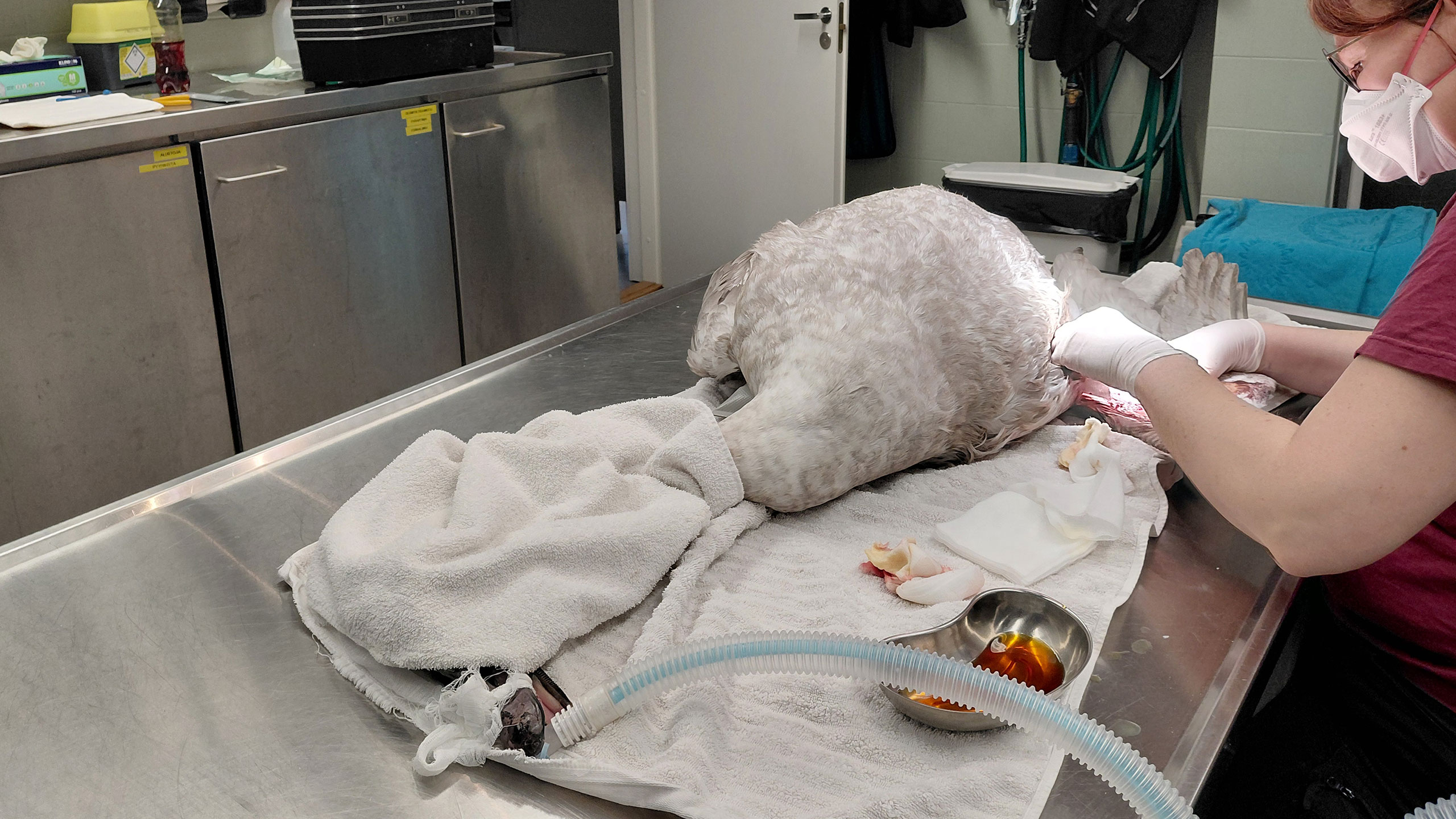
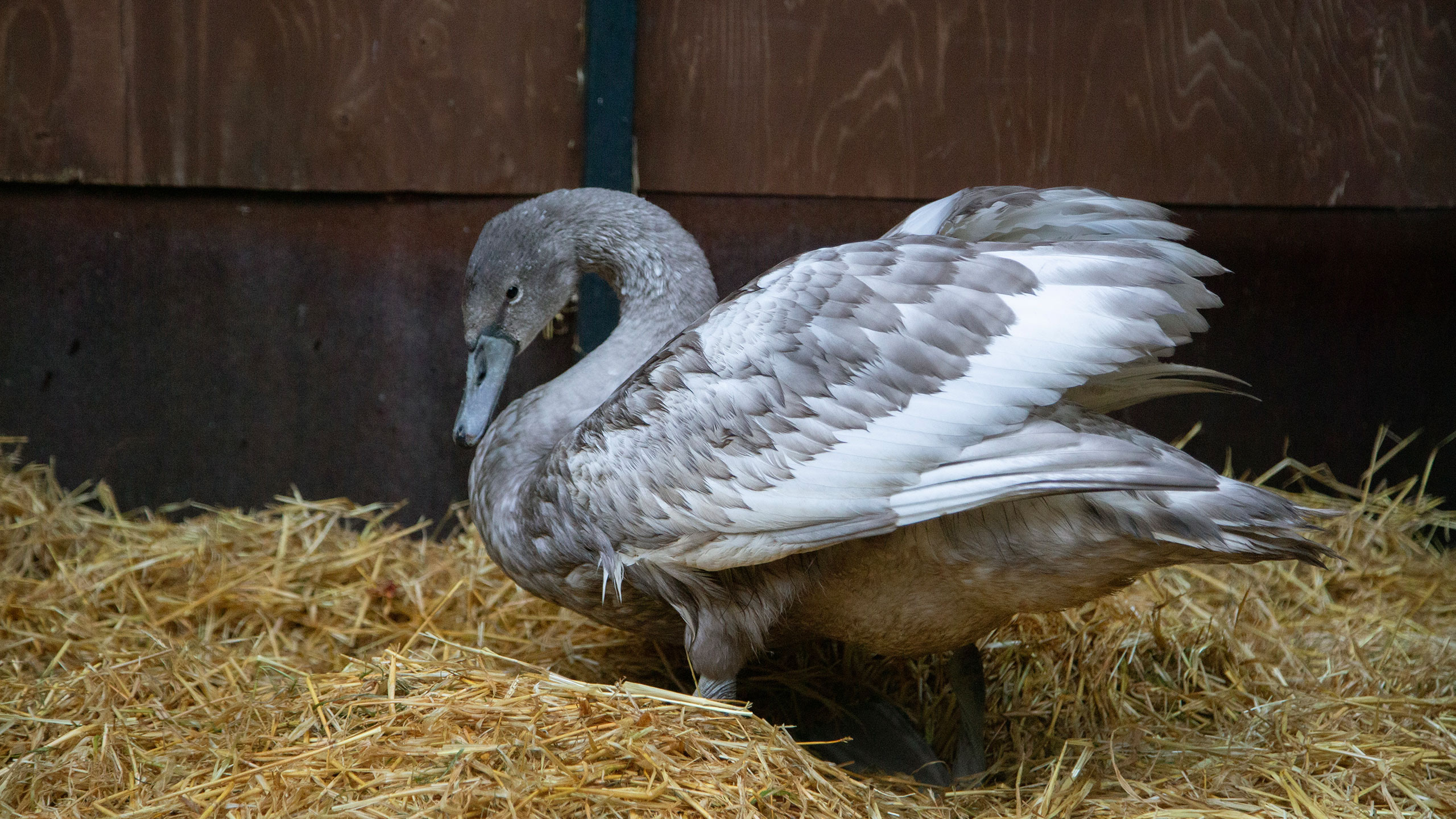
On the following Wednesday evening, a third severely injured mute swan was brought from the railway yard. A veterinarian stitched a large wound on its wing under anesthesia, and also removed a hook and lure that had become embedded in the bird’s thigh. The swan is now recovering at the Wildlife Hospital. Its readiness to return to the wild will be reassessed later.
Two other swan patients also arrived on the same week. A very thin mute swan was found in Hernesaari, Helsinki, with fishing line wrapped around its beak. It will rehabilitate at the Wildlife Hospital for the next few weeks and will be released once it has gained enough weight. Later in the week, a whooper swan was transported to the hospital after the Pirkanmaa Animal Welfare association had taken the disoriented bird in from the middle of a forest in Nokia. Both of this extremely thin bird’s eyes were so severely damaged that it was blind. The swan had to be euthanized, as it would not have been able to survive in the wild.
Korkeasaari Zoo’s Wildlife Hospital helps all native wild animals
Korkeasaari Zoo’s Wildlife Hospital is Finland’s largest care facility for injured and orphaned wild animals, receiving around 1,500 animals each year. Most patients are birds (78 % in 2024), with the remainder consisting of mammals as well as occasional reptiles and amphibians. The patients are cared for by animal keepers, veterinarians, and biologists experienced in working with wildlife. The goal is always to return the animals to the wild after successful treatment.
All native wild animals can receive care at the Wildlife Hospital. In urban environments, animals’ injuries are often caused directly or indirectly by humans: for example, tangling in fishing lines or nets, or unsuitable food, can cause serious harm to wildlife. The most common patients at the Wildlife Hospital are species typical in the Helsinki metropolitan area, such as squirrels, hedgehogs, and waterfowl. The Wildlife Hospital treats all wild birds despite the avian influenza situation. Owing to quarantine arrangements, we are able to continue our operations safely.
The Wildlife Hospital can also be contacted by phone when a wild animal needs urgent assistance or if you require additional guidance to determine whether an animal needs help. Recently, people have called about small birds and birds of prey that have collided with windows, migratory birds that have lost their way, bats startled from their winter roosts, and hares hiding motionless in place. We are happy to provide advice in situations involving wild animals that may be in distress. However, general questions about animals or inquiries about patients currently in our care are not handled by the phone service, so that the Wildlife Hospital staff can focus on treating the patients. The Wildlife Hospital is not open for visitors.
Support the work of the Wildlife Hospital!
Through our secure donation platform, you can support the Wildlife Hospital with the amount of your choice. Every donation, large or small, is an important contribution to the rehabilitation of wild animals. The funds will be used for the Wildlife Hospital’s activities, such as medical expenses, without deduction.
Thank you for being part of helping wild animals!