Published 03.09.2026
Two critically endangered Amur leopard cubs born at Korkeasaari Zoo
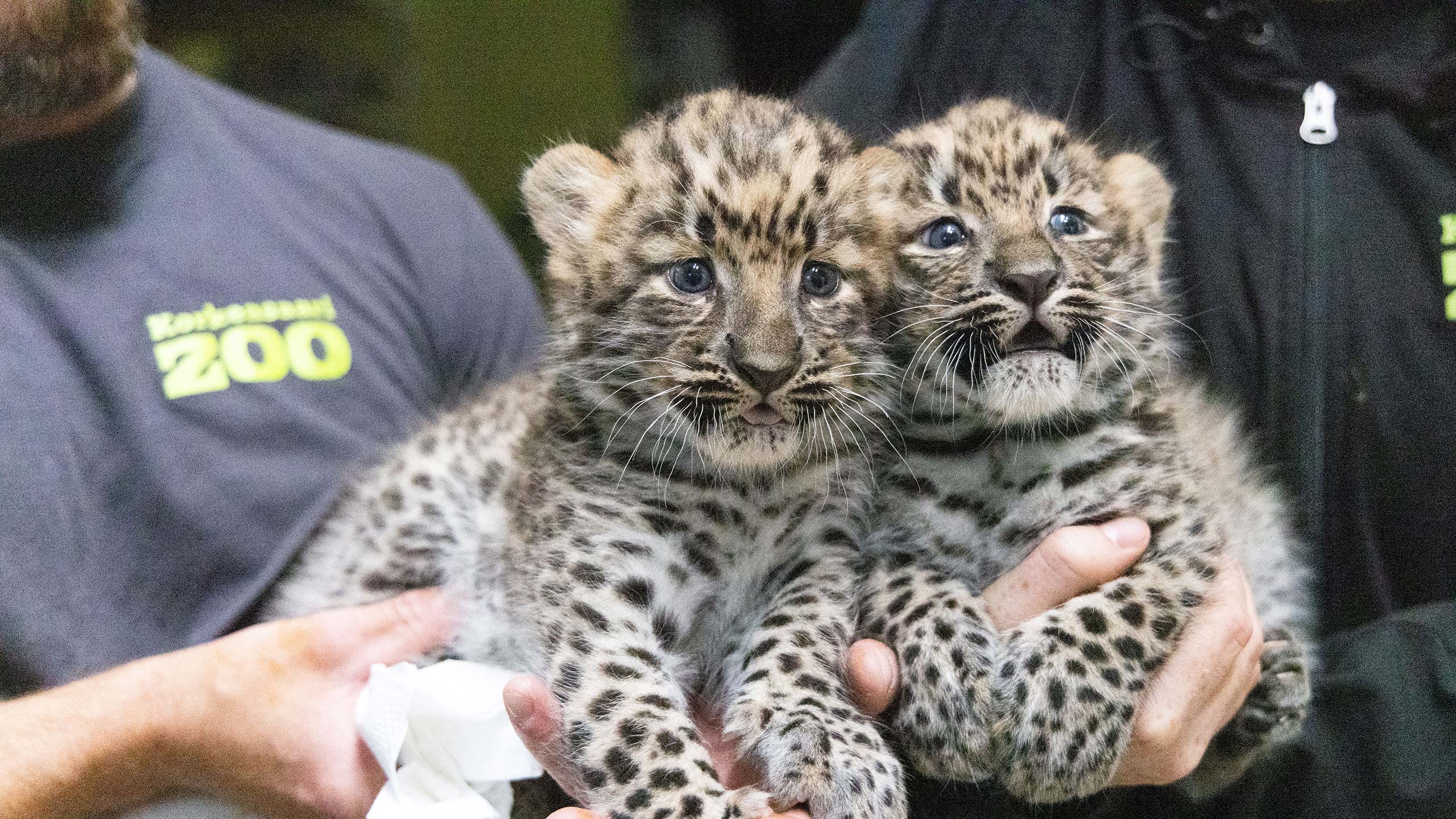
The world’s most endangered big cat, the Amur leopard, has welcomed two long-awaited cubs at Korkeasaari Zoo. The cubs are the first offspring of the pair and are now five weeks old, thriving under their mother’s attentive care. Korkeasaari Zoo has been working for many years to breed Amur leopards, as successful breeding plays an important role in maintaining genetic diversity in the zoo population.
At the end of July, zookeepers watched via a camera as the female Amur leopard retreated to her den to give birth. Three cubs were born, two of which survived. In five weeks, the tiny, helpless balls of fur have grown into lively young leopards weighing around 2.5 kilograms.
By around two months of age, their curiosity will start drawing them beyond the den, but before that their mother will not let them venture. The cubs’ father does not take part in raising them. Outside the breeding season, leopards are solitary animals.
Zookeepers and veterinarians have now been able to examine the cubs, which are a male and a female. They were weighed and dewormed, and given identification microchips. They were also photographed so that their individual spot patterns can be used for identification. While the cubs were being examined, their mother was happily occupied with a meal in the outdoor enclosure.

The right mate was found through a conservation programme
For five years, a suitable breeding partner for Korkeasaari Zoo’s male Amur leopard was searched among the zoos participating in the ex-situ conservation programme (EEP) of the European Association of Zoos and Aquaria (EAZA). The first potential mate was not a good match as the pair did not get along, while the second candidate proved to be too old. Successful breeding was achieved only with the third female.
“This pair hit it off from the very first moment they were introduced. They never once even growled at each other; instead, they mated for two to three days. The female became pregnant after their second introduction and went on to give birth to the cubs. For a first-time mother, she has been exceptionally calm and confident with them, almost like she had done this before,” says zookeeper Jonne Stenroth.
The father of Korkeasaari Zoo’s male Amur leopard is a rare founder animal originating from the wild. He was rescued from a protected area after being injured, but could not be rehabilitated and returned to the wild. He has only two male offspring, both born at Moscow Zoo. One of them is the male that was transferred to Korkeasaari Zoo in January 2021. The birth of his cubs at Korkeasaari Zoo is particularly significant for the conservation breeding programme, as it helps preserve this unique genetic lineage within the zoo population.
The Amur leopard needs protection
An estimated 130 Amur leopards remain in the wild. Their range extends across the Russian Far East and northeastern China. In addition to wildfires and development projects that reduce and fragment their habitat, the northernmost leopard subspecies faces threats from poaching and diseases. Another major concern is the low genetic diversity of the remaining wild population. At its lowest, the wild population consisted of just around 35 individuals, and it did not begin to recover until the 2010s. The subspecies could therefore benefit from reintroductions of zoo-bred leopards into the wild.
Korkeasaari Zoo supported Amur leopard conservation in the species’ native range for more than 20 years. Today, the species’ future is being supported through genetic research on the zoo population and by maintaining as much genetic diversity as possible through the EAZA ex situ conservation programme.
Plans to reintroduce Amur leopards from EEP-participating zoos to protected areas in Russia are currently on hold because of the geopolitical situation. Support for Amur leopard conservation in Russia has also been suspended for the time being. International conservation projects are, however, continuing on the Chinese side of the species’ range.