
Asiatic lion
Panthera leo persica
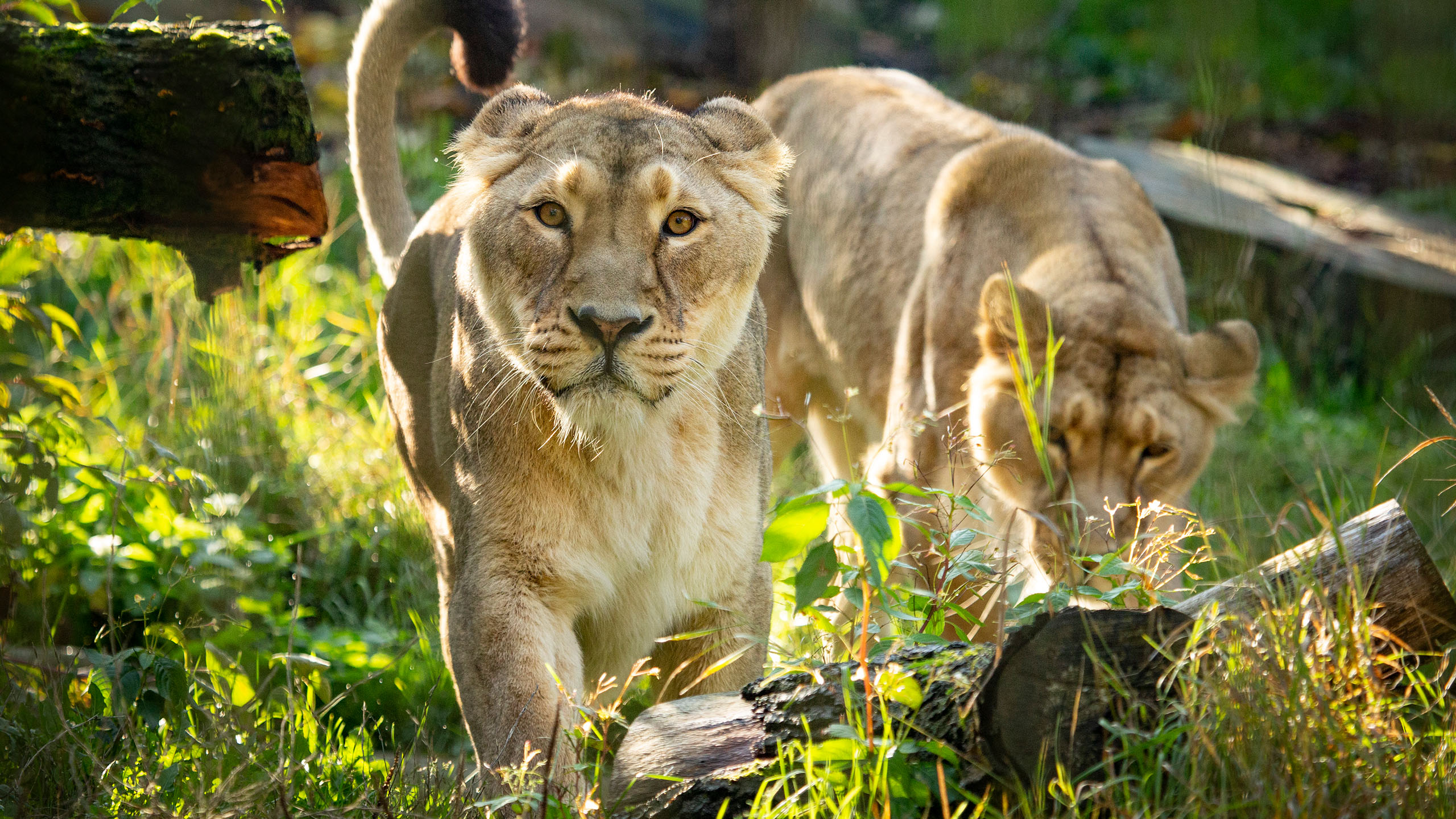
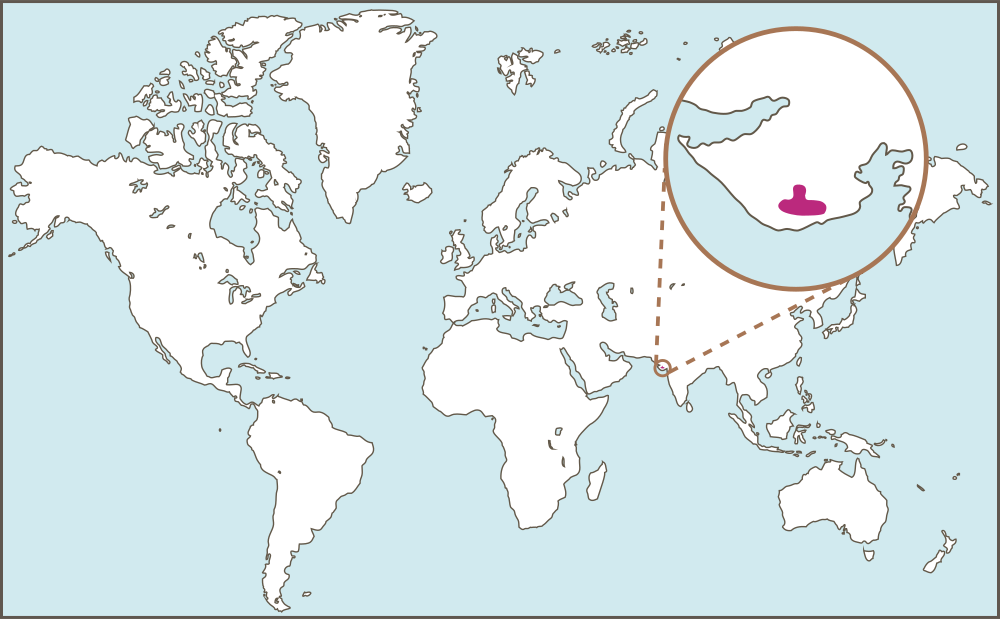
The Asiatic lion is now only found in a single forest area, Gir Forest National Park in northwest India. Although the number of lions has increased slightly, their small habitat makes them particularly vulnerable to natural catastrophes and epidemics of diseases. Zoos play an important role in preserving Asiatic lions for future generations.
Unlike all other felines, lions live in prides. The females hunt food for the pride and take joint care of the cubs. The males take care of the territory and announce this by making loud roars that can be heard from afar.
Conservaton
Giri National Park is a protected area, but has become too small to meet the needs of the growing lion population, due to conservation measures. A single site is also a risk, as an epidemic or major natural disaster such as a wildfire could wipe out the entire lion population. India has long had plans to move lions to another protected area.
The Asiatic lion was previously classified as its own subspecies, but today researchers consider it to be part of the northern subspecies of the lion. However, the Asiatic lion population has become distinct in its own way, and for this reason it is protected in zoos under its own dedicated conservation programme by the European Association of Zoos and Aquaria EAZA, known as the EEP. The aim of the EEP is to maintain a healthy zoo population of the lions, and to make reintroductions to the wild possible in the future.
Korkeasaari Zoo has also funded genetic research on Asiatic lions, which provides information that supports their conservation.
Cat Valley
EAZA ex-situ programme

Endangerment

Distribution
Habitat


Diet




Size
Lifespan
15-18 years
Scientific classification
Order: Carnivora
Family: Felidae